Skip to content
Smart Lead Tech
Home
Services
Our work
Saudi Arabia
About us
Blog
Contact us
🇸🇦العربيةContact now
Smart Lead Tech

Smart software solutions

Follow us

Company

  • About us
  • Our work
  • Our services
  • Saudi Arabia
  • Restaurant POS
  • Contact us
  • Book a call

Quick links

  • Blogs
  • Pricing
  • Refund policy
  • Privacy policy
  • Terms and conditions
  • Data deletion

Contact us

  • Egypt — Head Office

    Office 6, Bldg 23, Makkah Al-Mukarramah St., Omraneya, Giza 3540203, Egypt
  • Saudi Arabia — Branch

    Bldg 2646, Secondary 123, Street 7697, Ishbiliyah Dist., Jubail 35416, Kingdom of Saudi Arabia
  • Email address

    help@smartleadtech.com
  • Phone number 🇪🇬

    +20 102 201 4671
  • Phone number 🇸🇦

    +966 53 044 7112

© 2026 Smart Lead Tech. All rights reserved.

  • Smart Lead Tech Information Technology LLC·Commercial Register ⁦61239⁩·Tax ID ⁦774-391-316⁩

  • Smart Lead Tech Software Establishment·CR ⁦7054902585⁩·VAT

From RAG to agentic RAG: when the assistant stops “search then answer” and starts reasoning

A year ago we described RAG as “search your data, then answer”. That was true and enough for a support bot. But it fails on a question like: “What is the right learning path for a new sales hire who failed the product te…

06/02/2026 — 9 min read

Diagram of an agent that plans, retrieves and verifies before answering

A year ago we described RAG as “search your data, then answer”. That was true and enough for a support bot. But it fails on a question like: “What is the right learning path for a new sales hire who failed the product test, according to this year’s training policy?”. That question needs planning, several retrievals, and verification. That is agentic RAG.

The difference in one sentence

Classic RAG: one retrieval, one answer. Agentic RAG: a plan, multiple retrievals, verification, then a cited answer.

The loop we build

  1. Decomposition: the agent breaks the question into sub-questions (“what is the training policy?”, “what was the test result?”, “which paths exist?”).
  2. Multi-source retrieval: each sub-question goes to the right source — knowledge base, database, or API.
  3. Verification: do the sources conflict? Is the result sufficient? If not, retrieve again with a different phrasing.
  4. Composition: one answer with references, plus a list of what could not be confirmed.

A real application: Learnly and LMS By SLT

In Learnly (an enterprise LMS with SCORM support) the assistant does not just answer “where is the lesson”; it reads quiz results, compares them with path requirements, and proposes the next step. In the bilingual LMS By SLT, retrieval runs in Arabic and English together and is then merged — because half the content is written in one language and the question arrives in the other.

A completely different application: the Pioneers editorial platform

On Pioneers (an editorial reference for leaders in the Saudi market) we used the same loop for another purpose: fact-checking before publishing. The agent retrieves everything on record about a person from approved sources and flags any sentence in the draft it cannot support. It never wrote a single article; it prevented dozens of mistakes.

The mistakes you will make (we did)

  • Endless loops: cap the number of retrievals and set a time budget.
  • Over-confidence: make “not found” a legitimate, measured outcome, not a failure.
  • Authorisation after retrieval: it must apply before; the agent must not “see” what the user is not allowed to see.
  • Cost: four retrievals and three model calls for one question — measure, and use smaller models for the intermediate steps.

When you do not need it

If your users ask “what are the opening hours?”, plain RAG is better, cheaper and faster. Agentic RAG is for the questions a human would need three open windows to answer.
Share

Projects related to this article

  • AI SystemsPythonNext.jsDocker

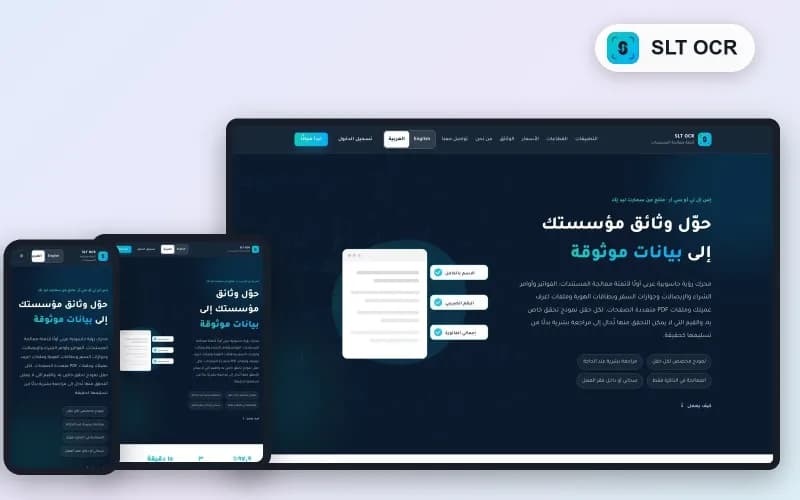
    SLT OCR — Arabic-first Document Data Extraction

    An Arabic-first computer-vision engine that turns invoices, purchase orders, receipts, ID cards and KYC packs into data you can trust — a verification model per field, human review when needed, processed in memory only.

    Show more
    SLT OCR — product landing on desktop and phone
  • Real EstateLaravel

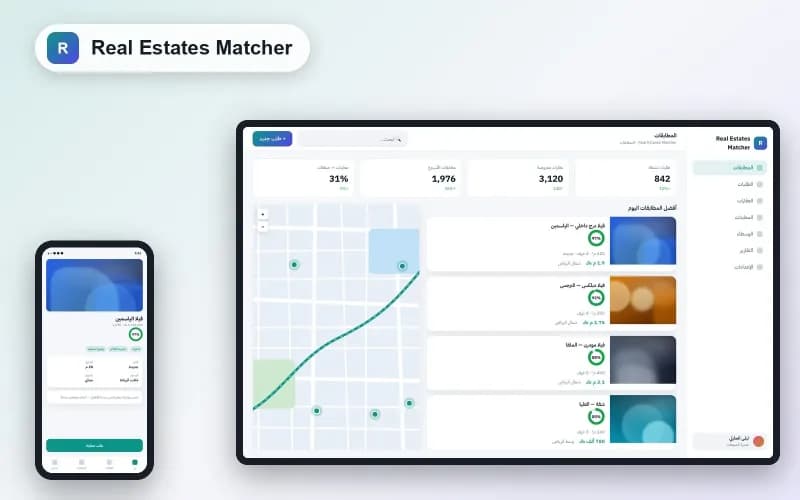
    Real Estates Matcher — AI-Powered Property Matching

    A smart real-estate platform that matches demand and supply using AI and data analytics.

    Show more
    Real Estates Matcher — smart demand-supply matching
  • EducationLaravel

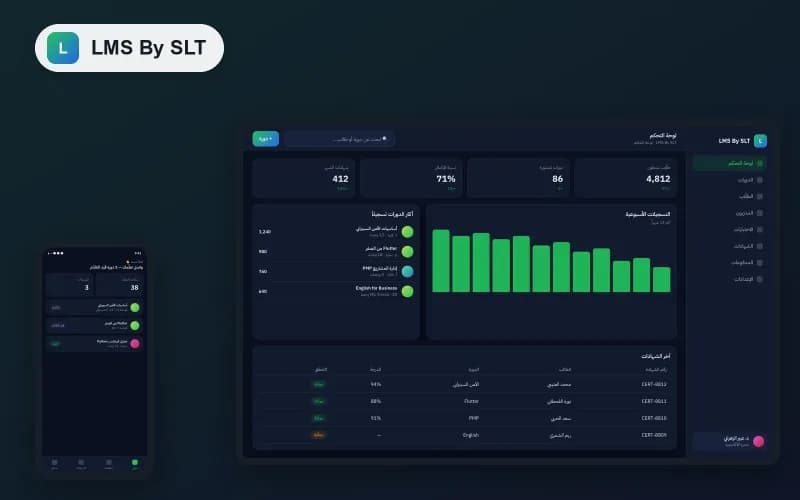
    LMS By SLT — Bilingual Learning Management Platform

    A high-performance, bilingual learning-management platform with a custom certificate generator and full student/teacher/course management.

    Show more
    LMS By SLT — bilingual LMS with custom certificates

Related Blogs

  • Architectural diagram of the RAG pattern

    What is RAG and why it matters for every LLM-powered product

    You have heard Retrieval-Augmented Generation (RAG) in every recent tech conference. Here is the pragmatic version: when do you actually need it, and how do you build it safely on top of your own data?Why not just use an…

    02/10/2025 — 9 min read

  • An industrial robot extending its hand towards a screen displaying AI data with a map of the GCC and Egypt in the background, symbolizing innovation and opportunities in the region.

    AI in GCC and Egypt: Sector Opportunities and Governance Risks in 2026

    The technological landscape in the GCC and Egypt is undergoing rapid transformation, driven by massive investments in artificial intelligence (AI) and its adoption across vital sectors such as industry, tourism, and cons…

    09/29/2026 — 8 min read

  • Comparison table of three language models on Arabic tasks

    Lab report: GPT‑5, Claude Opus 5 and Gemini on Arabic — who actually understands our dialects?

    This is a lab report, not an opinion piece. BrandBoost AI (our bilingual marketing copilot) and Kaleem (speech therapy for children) depend entirely on language models, so we re-evaluate every quarter against a fixed tes…

    07/28/2026 — 10 min read