Skip to content
Smart Lead Tech
Home
Services
Our work
Saudi Arabia
About us
Blog
Contact us
🇸🇦العربيةContact now
Smart Lead Tech

Smart software solutions

Follow us

Company

  • About us
  • Our work
  • Our services
  • Saudi Arabia
  • Restaurant POS
  • Contact us
  • Book a call

Quick links

  • Blogs
  • Pricing
  • Refund policy
  • Privacy policy
  • Terms and conditions
  • Data deletion

Contact us

  • Egypt — Head Office

    Office 6, Bldg 23, Makkah Al-Mukarramah St., Omraneya, Giza 3540203, Egypt
  • Saudi Arabia — Branch

    Bldg 2646, Secondary 123, Street 7697, Ishbiliyah Dist., Jubail 35416, Kingdom of Saudi Arabia
  • Email address

    help@smartleadtech.com
  • Phone number 🇪🇬

    +20 102 201 4671
  • Phone number 🇸🇦

    +966 53 044 7112

© 2026 Smart Lead Tech. All rights reserved.

  • Smart Lead Tech Information Technology LLC·Commercial Register ⁦61239⁩·Tax ID ⁦774-391-316⁩

  • Smart Lead Tech Software Establishment·CR ⁦7054902585⁩·VAT

How we hire engineers in the AI era: no algorithm puzzles, no tool bans, and one interview that reveals everything

We dropped the “reverse a linked list” test in 2024. It measured something we no longer needed, and missed everything we did. Since then we have hired dozens of engineers for projects in eight countries, and this is the …

09/05/2026 — 8 min read

A software engineer interview with an open code screen and an AI assistant

We dropped the “reverse a linked list” test in 2024. It measured something we no longer needed, and missed everything we did. Since then we have hired dozens of engineers for projects in eight countries, and this is the method we settled on — it may not suit everyone, but it works.

The principle: measure what they will do at work, with the tools they will use at work

Our engineers work with Claude Code and Cursor daily. Banning them in an interview is like banning a calculator in an accountant’s interview. Tools are allowed — required, even — and the question changes: not “can you write this?” but “can you get to the right thing, verify it, and explain it?”.

The one interview (90 minutes)

  1. A real (anonymised) client problem: “A salon wants WhatsApp appointment reminders with attendance confirmation; the current system is Laravel.” No more detail. The first 15 minutes we listen to the questions they ask — questions reveal more than answers.
  2. Build with the agent (40 minutes): they open their preferred tool and work. We watch: how do they describe the task? Do they read what is produced or accept it? Do they notice the agent forgot the cancellation case? Do they test?
  3. The defence (20 minutes): we ask “why this table?”, “what if WhatsApp sends the message twice?”, “how do you know it works a month later?”. Whoever cannot explain their code does not own it — even if they typed it themselves.
  4. Writing (15 minutes): a paragraph for a non-technical client explaining what was built, what was not, and why. Arabic or English depending on the assumed client.
We do not hire the fastest coder. We hire whoever notices the mistake fastest.

Exactly what we look for

  • Domain curiosity: they ask about WhatsApp’s 24-hour window, the cancellation policy, the branches. They think like a product owner.
  • Healthy scepticism: they read the agent’s output as a reviewer, not a consumer.
  • Trust boundaries: they ask where the phone number comes from and whether it is verified. Security as instinct, not a checklist.
  • Clarity: they say “I don’t know, I’ll check” instead of confident guessing.

What we do not care about

The university. The number of languages on the CV. Memorised algorithmic complexity. Cloud certificates. All can be fine, but none predicts anything we see in the interview.

For applicants: how to prepare

  1. Build a small, complete project with an agent tool, ship it, and be ready to defend every decision in it.
  2. Pick a domain and read its regulations (fintech, health, real estate). You will understand our questions differently.
  3. Practise explaining a technical idea to a non-technical person in five sentences.

And for anyone still looking for their path before applying, we built platforms like MyCareer and Career Scale for exactly that: knowing what fits you before trying to fit everything.
Share

Projects related to this article

  • AI SystemsPythonNext.jsDocker

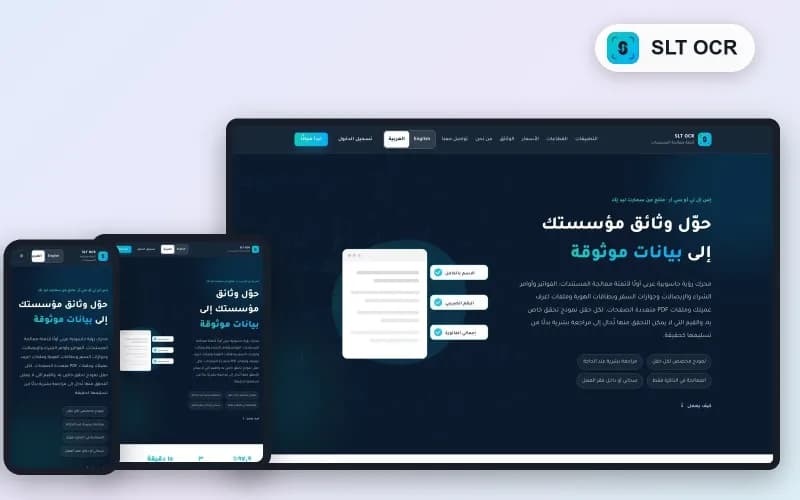
    SLT OCR — Arabic-first Document Data Extraction

    An Arabic-first computer-vision engine that turns invoices, purchase orders, receipts, ID cards and KYC packs into data you can trust — a verification model per field, human review when needed, processed in memory only.

    Show more
    SLT OCR — product landing on desktop and phone
  • Real EstateLaravel

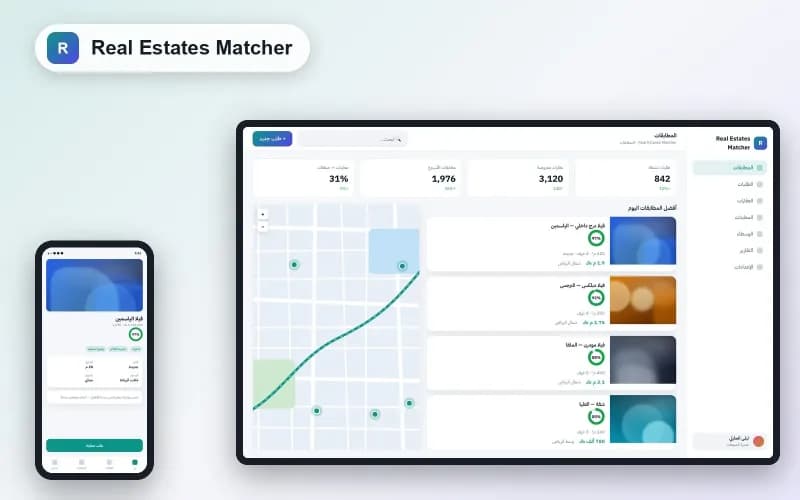
    Real Estates Matcher — AI-Powered Property Matching

    A smart real-estate platform that matches demand and supply using AI and data analytics.

    Show more
    Real Estates Matcher — smart demand-supply matching
  • HR SystemsLaravel

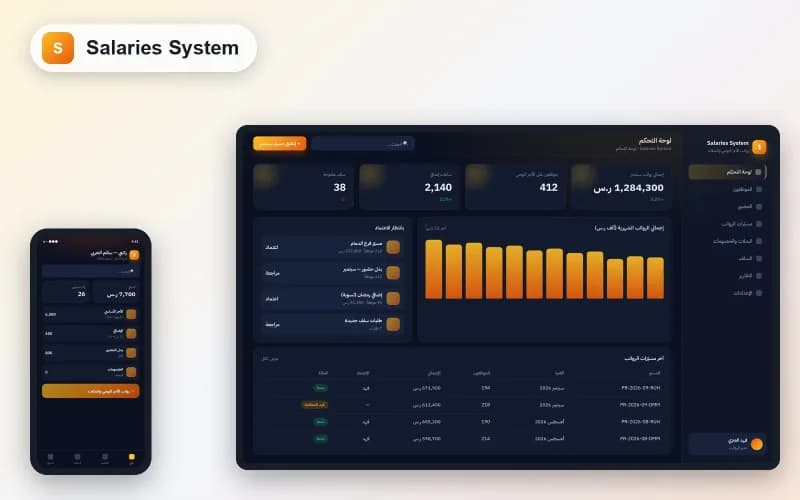
    Salaries System — Daily-Rate Payroll & Benefits Suite

    A complete payroll suite for daily-rate wages, attendance allowances, overtime, incentives and deductions — accurate every month.

    Show more
    Salaries System — accurate daily payroll and monthly reports

Related Blogs

  • A junior engineer sitting next to a senior in front of one screen

    Is the junior developer dead? A contrarian view from a company that hires juniors on purpose

    The popular theory: AI does what the junior used to do, so why hire one? Big companies cut graduate programmes, and forums are full of graduates without a single interview. I will say something contrarian: the junior did…

    09/04/2026 — 7 min read

  • An engineer looking at a screen of tech layoff headlines and new opportunities

    The 2024–2026 layoff wave: what is really happening in the software market, and what an Arab engineer should do tomorrow morning

    Since 2023 the headlines look alike: a big company lays off thousands, then announces a multi-billion AI investment the same week. In Arab engineering groups the question is the same: “is our role over?”. This is an opin…

    09/06/2026 — 9 min read

  • A distributed team between Cairo and Riyadh on one call

    An engineering team between Cairo and Riyadh: 7 operating rules learned from fifty distributed projects

    Remote work is no longer a debate; it is the default reality for any Arab software company selling to the Gulf. But “remote” makes some teams succeed and others fail with equal force. These seven rules are what made our …

    08/31/2026 — 7 min read