Skip to content
Smart Lead Tech
Home
Services
Our work
Saudi Arabia
About us
Blog
Contact us
🇸🇦العربيةContact now
Smart Lead Tech

Smart software solutions

Follow us

Company

  • About us
  • Our work
  • Our services
  • Saudi Arabia
  • Restaurant POS
  • Contact us
  • Book a call

Quick links

  • Blogs
  • Pricing
  • Refund policy
  • Privacy policy
  • Terms and conditions
  • Data deletion

Contact us

  • Egypt — Head Office

    Office 6, Bldg 23, Makkah Al-Mukarramah St., Omraneya, Giza 3540203, Egypt
  • Saudi Arabia — Branch

    Bldg 2646, Secondary 123, Street 7697, Ishbiliyah Dist., Jubail 35416, Kingdom of Saudi Arabia
  • Email address

    help@smartleadtech.com
  • Phone number 🇪🇬

    +20 102 201 4671
  • Phone number 🇸🇦

    +966 53 044 7112

© 2026 Smart Lead Tech. All rights reserved.

  • Smart Lead Tech Information Technology LLC·Commercial Register ⁦61239⁩·Tax ID ⁦774-391-316⁩

  • Smart Lead Tech Software Establishment·CR ⁦7054902585⁩·VAT

Scalable NestJS architecture — from module to monorepo

Our large NestJS projects start as "one app with modules". Today anything with more than ten modules lives inside a monorepo. This note explains when we make each leap and what the team gains from it.Stage 1: Single app …

10/18/2024 — 10 min read

Scalable NestJS architecture

Our large NestJS projects start as "one app with modules". Today anything with more than ten modules lives inside a monorepo. This note explains when we make each leap and what the team gains from it.

Stage 1: Single app + modular modules

  • Every feature lives in its own module (Auth, Billing, Content…).
  • Shared types/DTOs only inside src/common.
  • e2e tests live inside each module to keep it isolated.

Stage 2: Monorepo + libraries

When the system grows we use nest g app|lib. Libraries become shared contracts (types / DTOs / interfaces); apps stay independently deployable.

Patterns we rely on

  1. Lean controllers: accept a DTO, call a use-case / service.
  2. Service = application layer — orchestrates repositories and domain.
  3. Repository: interface + TypeORM/Prisma implementation; swappable with a fake.
  4. Domain: pure value objects and business rules.
Boundary rule: the domain does not know about the DB; the infrastructure does not contain business logic. That is the real difference between DDD and MVC.

Observability

  • Pino for structured logs.
  • OpenTelemetry with Tempo/Grafana for distributed tracing.
  • Prometheus + custom exporters for business metrics.

Takeaway

Scalable architecture is not a framework — it is clear boundaries. Drawing them on day one saves an 18-month rewrite.
Share

Projects related to this article

  • Real EstateLaravel

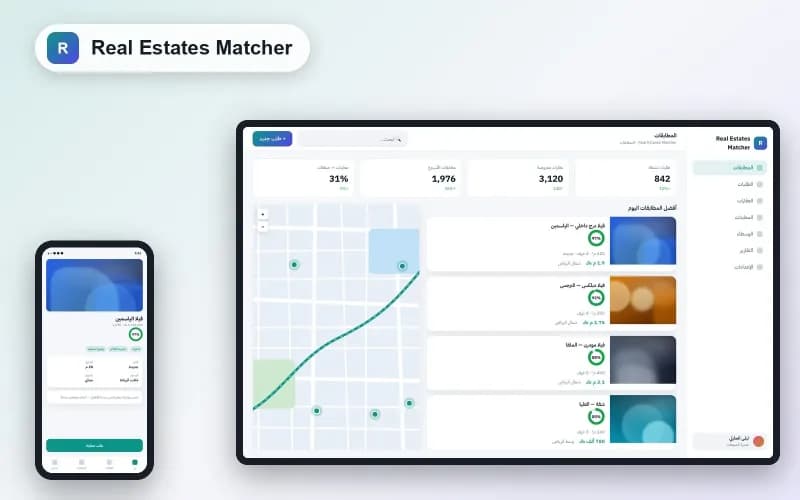
    Real Estates Matcher — AI-Powered Property Matching

    A smart real-estate platform that matches demand and supply using AI and data analytics.

    Show more
    Real Estates Matcher — smart demand-supply matching
  • AI SystemsPythonNext.jsDocker

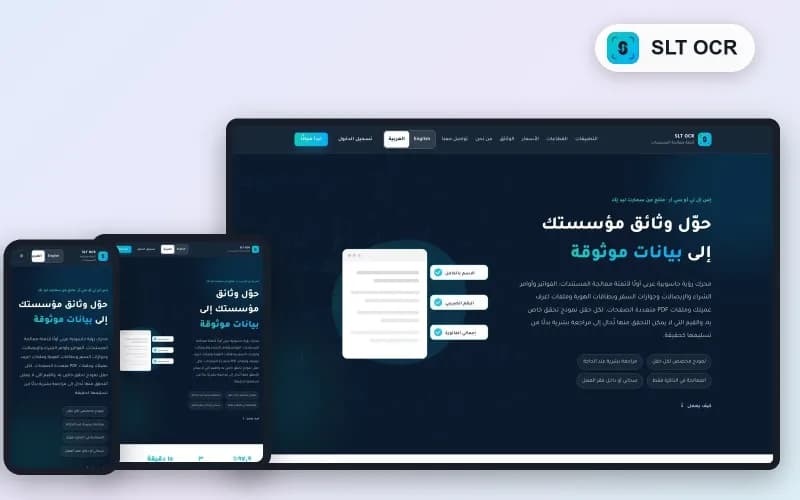
    SLT OCR — Arabic-first Document Data Extraction

    An Arabic-first computer-vision engine that turns invoices, purchase orders, receipts, ID cards and KYC packs into data you can trust — a verification model per field, human review when needed, processed in memory only.

    Show more
    SLT OCR — product landing on desktop and phone
  • AI SystemsFlutter

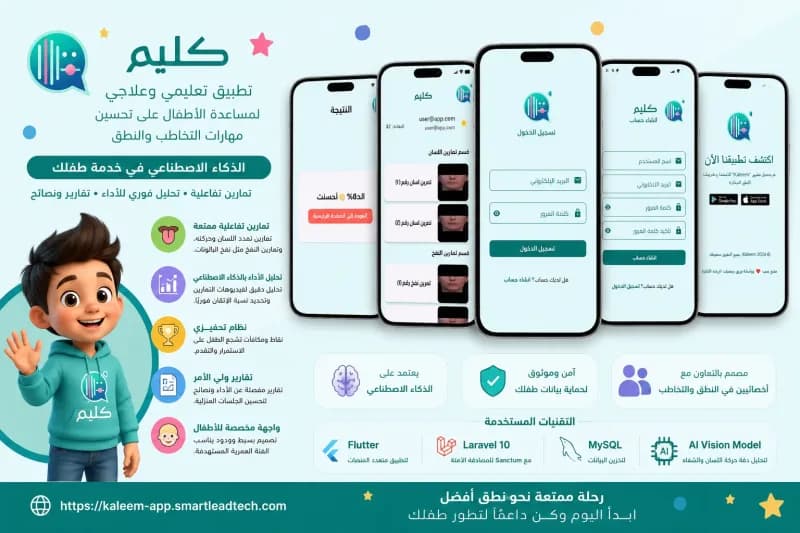
    Kaleem — AI-Powered Speech Therapy for Kids

    A playful, AI-powered speech-therapy app for children, with interactive exercises and a friendly mascot to keep them engaged.

    Show more
    Kaleem — AI speech therapy for children

Related Blogs

  • Pragmatic SOLID in Laravel 11

    Clean repositories and services in Laravel 11 — pragmatic SOLID

    Everything here comes from shipping dozens of real-customer APIs. The goal is not "SOLID for its own sake"; it is two things: testable code and clear layers that never mix.The layer cake we default toRoute: endpoint name…

    12/14/2024 — 13 min read

  • Three devices — a cashier terminal, a kitchen display and a customer phone — running one Flutter codebase

    One codebase from the cashier to a salon marketplace: 10 lessons from two years of Flutter

    The TtaKkaa ecosystem alone is four apps: cashier, kitchen display, customer app and store dashboard. Add Beauty Map and Home Beauty for beauty services, and Meshareeb for beverage delivery in Kuwait. All Flutter. Here a…

    02/24/2026 — 8 min read

  • Flutter-built POS application

    Flutter for POS systems: offline-first done right

    POS apps do not run in perfect conditions. The internet drops, power cycles, and the branch still must sell. This note captures the pattern we use on TtaKkaa Cashier to keep operations smooth regardless of connectivity.T…

    11/05/2024 — 8 min read